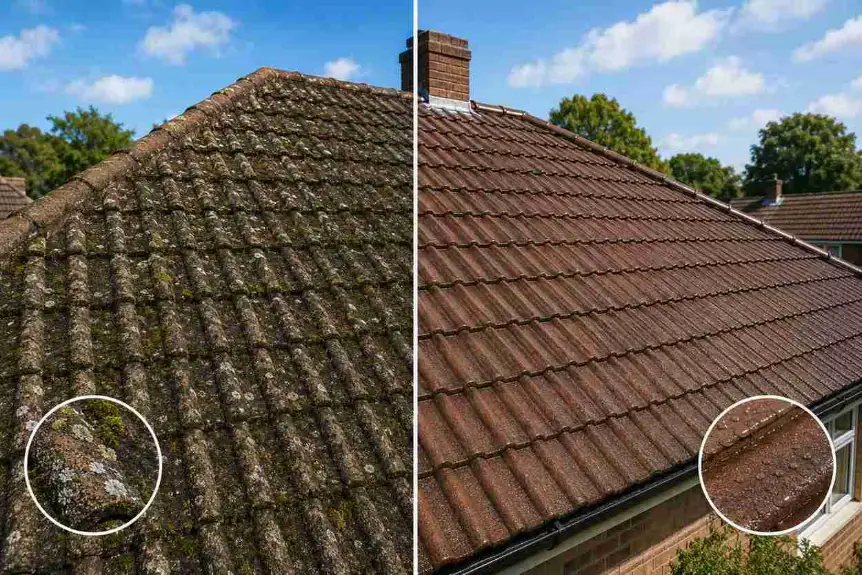
You’ve just paid for a proper roof clean. The moss is gone, the algae streaks have disappeared, and your tiles look almost new again. Most homeowners stop right there and that’s exactly where the problem starts.
A cleaned roof is a bare roof. Strip away years of moss, lichen and biological grime and you also strip away whatever natural weathering layer had built up on the tile surface. Underneath is porous, exposed material that’s now more vulnerable to rain, UV light and airborne spores than it was before you cleaned it. Roof sealing closes that gap. It’s the step that turns a one-off clean into long-term protection, and it’s the single biggest factor separating a roof that stays moss-free for five-plus years from one that’s green again within eighteen months.
This guide breaks down exactly what roof sealing does, why it matters so much straight after a clean, and what to expect if you’re considering it for a property in Bournemouth, Poole, Christchurch or anywhere across Dorset.
What Is Roof Sealing, Exactly?
Roof sealing (sometimes called roof coating or tile sealing) involves applying a liquid protective layer usually a siloxane, acrylic or elastomeric coating directly onto clean, dry roof tiles. Once cured, it forms a breathable, water-repellent membrane that sits on and slightly within the tile’s surface pores.
It’s not paint, and it’s not a cosmetic gloss. A proper sealant is designed to:
- Repel water rather than let it soak into the tile
- Block UV degradation of the tile surface
- Create a surface that’s inhospitable to moss spores and algae
- Allow trapped moisture vapour to escape from within the tile (so the roof can still “breathe”)
This last point matters. A non-breathable coating can trap moisture underneath and actually accelerate tile damage — which is why the quality of the product and the skill of the applicator both matter more than people assume.
Why Sealing Right After Cleaning Makes Such a Difference
Timing is everything with roof sealing, and this is the part most guides skip over.
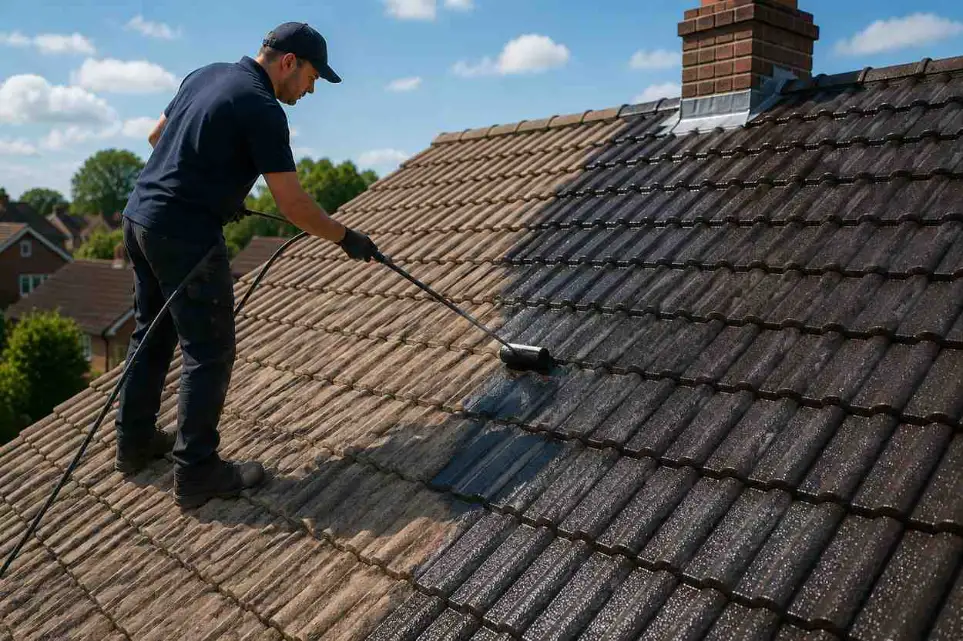
When a roof is professionally cleaned using soft washing and biocide treatment, the process removes moss, lichen, algae and the biofilm that builds up over years. That biofilm, while unattractive, was also acting as a partial barrier. Once it’s gone, the tile surface is at its most porous and absorbent a bit like skin straight after exfoliating. Rainwater, airborne pollutants and new spore growth all find it far easier to take hold on a freshly cleaned, unsealed roof than on one that’s been dirty for years.
A freshly cleaned roof left unsealed can actually regrow moss faster in the first year than a roof that was simply left alone, because the exposed pores provide an ideal foothold for new spores to settle into.
Sealing immediately after cleaning closes that window. It locks in the clean result, protects the newly exposed tile surface, and extends the effectiveness of whatever roof moss removal and biocide work was just carried out. Clean without seal, and you’re often just buying yourself twelve to eighteen months before regrowth starts creeping back in from the shaded, north-facing sections first.
The Core Benefits of Roof Sealing After Cleaning
1. Significantly Extended Roof Lifespan
Concrete and clay tiles are durable, but they’re not indestructible. Repeated freeze-thaw cycles, standing moisture and UV exposure gradually degrade the tile surface, making it more brittle and prone to cracking over time. A sealed roof resists water absorption, which means less freeze-thaw stress and a noticeably slower rate of surface degradation. Many roofs that are cleaned and sealed on a regular cycle last several years longer before re-roofing becomes necessary.
2. Moss and Algae Regrowth Prevention
This is the benefit most homeowners care about most. Sealants create a smoother, less porous surface with fewer places for spores to anchor and germinate. Combined with the biocide treatment already applied during cleaning, sealing meaningfully slows down how quickly moss and algae can re-establish themselves particularly on shaded roof slopes or those overhung by trees, which are typically the worst offenders for regrowth.
3. Genuine Waterproofing, Not Just Water Resistance
Unsealed tiles absorb water like a very slow sponge. Over years, this contributes to internal dampness, timber rot in the roof structure, and staining on ceilings. A quality sealant creates a hydrophobic surface that sheds water rather than absorbing it, reducing the volume of moisture reaching the tile’s substrate and the roof timbers beneath it.
4. UV and Weather Resistance
Tiles fade and become chalky or brittle under years of UV exposure. Sealants with UV inhibitors slow this degradation, helping tiles keep their original colour and structural integrity for longer particularly relevant on south-facing roof slopes that take the brunt of Dorset’s summer sun.
5. Restored and Longer-Lasting Kerb Appeal
A cleaned roof looks great on day one. A sealed roof looks great for years. Sealants often slightly enhance tile colour and give a uniform, richer finish, and because they slow down dirt adhesion and biological regrowth, the “just cleaned” look sticks around far longer something worth factoring in if you’re planning to sell.
6. Real Cost Savings Over Time
Roof cleaning without sealing typically needs repeating every 2–3 years in moss-prone areas. Cleaning plus sealing stretches that cycle to 5–10 years depending on the product and conditions. When you weigh the modest additional cost of sealing against the price of a full re-clean every couple of years — not to mention avoided repair costs from moisture damage sealing is one of the better value-for-money additions available at the point of cleaning.
7. Fewer Blocked Gutters and Less Downstream Damage
Moss doesn’t just sit on the roof it sheds, breaks down, and washes into gutters, where it contributes to blockages and overflow. A roof that stays cleaner for longer sends less debris into the guttering system, which reduces how often you need gutter cleaning and lowers the risk of water overflowing at the eaves and damaging fascias, soffits or brickwork.
8. Protects the Investment You Already Made
You’ve paid for professional roof cleaning sealing is what protects that outlay. Without it, you’re effectively paying for the same clean again in a much shorter window. With it, the labour and treatment already carried out keeps paying off for years rather than months.
Roof Sealing vs. No Sealing: A Direct Comparison
| Factor | Cleaned, Not Sealed | Cleaned and Sealed |
|---|---|---|
| Typical time before moss regrowth | 12-24 months | 5-10 years |
| Water absorption | High tile stays porous | Low surface sheds water |
| UV degradation rate | Standard | Slowed by UV-resistant coating |
| Gutter debris from moss shedding | Ongoing | Significantly reduced |
| Kerb appeal retention | Fades within 1–2 years | Maintained for years |
| Long-term cost over 10 years | Higher (repeat cleans) | Lower (fewer full cleans needed) |
| Risk of tile surface erosion | Higher | Reduced |
How Long Does a Roof Sealant Actually Last?
Most professional-grade tile sealants last between five and ten years, though this varies based on:
- Roof orientation north-facing and heavily shaded slopes generally see faster wear
- Tile material concrete, clay, slate and fibre cement all absorb and hold sealant differently
- Local climate exposure coastal Dorset properties deal with salt-laden air, which can affect longevity
- Product quality trade-grade silicone or siloxane sealants generally outperform budget acrylic coatings
- Application standard even coverage and correct curing time both matter enormously
A reputable installer will always recommend the product suited to your specific tile type and roof exposure rather than a one-size-fits-all coating.
Is Roof Sealing Suitable for Every Roof Type?
Broadly yes, but the approach differs by material.
| Tile Type | Sealing Suitability | Notes |
|---|---|---|
| Concrete tiles | Excellent | Porous surface absorbs sealant well; among the best candidates |
| Clay tiles | Good | Breathable sealants recommended to avoid trapping moisture |
| Natural slate | Good, with caution | Requires a sealant formulated for low-porosity surfaces |
| Fibre cement | Good | Often paired with a specific primer for best adhesion |
| Flat/felt roofing | Different process | Typically needs a dedicated roofing membrane, not a tile sealant |
If you’re unsure which category your roof falls into, a proper inspection before quoting is essential this is standard practice with any reputable roof coating and sealing service.
Common Myths About Roof Sealing
“Sealing traps moisture and causes rot.” This only happens with poor-quality, non-breathable products applied incorrectly. Properly formulated tile sealants are vapour-permeable, meaning moisture inside the roof structure can still escape while liquid water is kept out.
“Sealing is purely cosmetic.” It’s the opposite the visual improvement is a side effect of a coating that’s primarily doing a waterproofing and anti-microbial job.
“You can seal a dirty or damp roof.” Sealant needs to bond to a clean, dry surface. Applying it over moss, algae or moisture significantly shortens its lifespan and can trap organic matter beneath the coating, which is precisely why sealing should always follow a proper clean rather than be treated as a standalone job.
“All sealants perform the same.” Product quality varies enormously. Trade-grade siloxane and silicone-based coatings generally outperform cheaper acrylic alternatives, particularly in a coastal climate like Bournemouth’s.
When Should You Seal Your Roof After Cleaning?
The ideal window is immediately after cleaning, once the roof has fully dried typically within 24-48 hours, weather dependent. Sealing while the tile surface is freshly exposed and free of biological growth gives the coating the best possible bond and the longest effective lifespan. Waiting weeks or months after a clean means the tile has already started re-absorbing moisture and airborne spores, which reduces how well the sealant adheres and how long it protects the roof.
DIY Roof Sealing vs. Professional Application
It’s tempting to treat roof sealing as a weekend DIY job, but uneven application, incorrect product choice for the tile type, and working at height without proper safety equipment are the three most common reasons DIY seals fail within a year or two often costing more to correct than a professional job would have cost in the first place.
Professional application typically includes:
- A full roof inspection to confirm tile type and condition
- Confirmation the roof is fully clean and dry before application
- Use of trade-grade, breathable sealant products
- Even, controlled application across the entire roof surface, including ridges and valleys
- Correct curing time before the roof is exposed to rain
What Does Roof Sealing Cost in Bournemouth?
Pricing depends on roof size, tile type, pitch and the sealant product used, and it’s usually quoted alongside the initial clean rather than as a separate call-out. For a detailed breakdown of what a typical roof clean costs in this area before sealing is factored in, our guide on how much roof cleaning costs in Bournemouth covers current local pricing in more depth. If you’re also weighing up cleaning methods before committing to a full clean-and-seal package, it’s worth reading our comparison of soft washing versus pressure washing, since the cleaning method used directly affects how well a sealant will bond afterwards.
For wider industry standards on protective roof treatments and material guidance, the National Federation of Roofing Contractors publishes useful technical guidance on tile maintenance and coatings.
Frequently Asked Questions
Does roof sealing stop moss coming back completely? No treatment offers a permanent guarantee, since spores travel by air and will always land on any roof eventually. What sealing does is make the surface far less hospitable for spores to establish themselves, significantly slowing regrowth compared to an unsealed roof.
Can I seal my roof myself? Technically yes, but between working safely at height, achieving even coverage, and selecting the correct product for your tile type, most homeowners find professional application delivers a longer-lasting result for a comparable overall cost.
Will sealing change the colour of my roof? Most sealants slightly enhance and even out existing tile colour rather than changing it, though some products are available with a light colour-restoration tint for older, faded tiles.
How soon after cleaning should sealing happen? Ideally within a day or two, once the roof has fully dried and while the surface is still free of new biological growth.
Does sealing work on old or already-damaged tiles? Sealant can help protect ageing tiles and slow further degradation, but it won’t repair existing cracks or structural damage those need addressing separately before sealing goes ahead.
Getting Your Roof Cleaned and Sealed Properly
Cleaning removes the problem. Sealing keeps it from coming back. Treated as a pair rather than two separate decisions, they’re what actually protects a roof for the long haul rather than just resetting the clock for a year or two.
If you’re in Bournemouth, Poole, Christchurch or anywhere across Dorset and want a straight answer on whether your roof is a good candidate for sealing, get in touch for a free, no-obligation quote and we’ll assess your tile type, roof condition and exposure before recommending the right approach.