If you’ve walked past your house recently and noticed dark green or black patches creeping across your roof tiles, you’re not alone. Moss growth is one of the most common and most overlooked roofing issues homeowners in Bournemouth deal with, thanks to our coastal climate, salty sea air, and the near-constant moisture rolling in off the English Channel. A little moss might seem harmless, even a bit charming in a “cottage garden” sort of way, but left unchecked, it can quietly cause thousands of pounds in damage.
This guide walks through exactly how to spot the warning signs, why Bournemouth roofs are particularly prone to moss, what happens if you ignore it, and how professional roof moss removal differs from a DIY pressure-wash on a Saturday afternoon.
Why Bournemouth Roofs Are Especially Prone to Moss
Bournemouth sits right on the Dorset coast, and that location works against roof owners in a few specific ways:
- High humidity and sea mist keep roof surfaces damp for longer stretches than inland towns.
- Salt-laden air accelerates the breakdown of mortar, flashing, and tile coatings, giving moss spores an easier surface to latch onto.
- Mature tree cover in areas like Talbot Woods, Southbourne, and Westbourne means more shade and more falling organic debris both of which moss thrives on.
- North-facing roof slopes, common on many Victorian and Edwardian terraces across the town, rarely get direct sunlight, so they stay damp almost year-round.
Put simply, if you live in or around Bournemouth, your roof is working against a near-perfect moss-growing environment. If you’re curious how quickly this actually happens tile by tile, we broke the full progression down in how fast moss actually grows on a roof, from the first spores landing to a fully established colony.
The Early Warning Signs You Shouldn’t Ignore
Most roofing problems don’t appear overnight they build gradually, and moss is no exception. Here are the signs that indicate it’s time to call in a professional rather than wait it out.
1. Visible Green, Black, or Grey Patches on Tiles
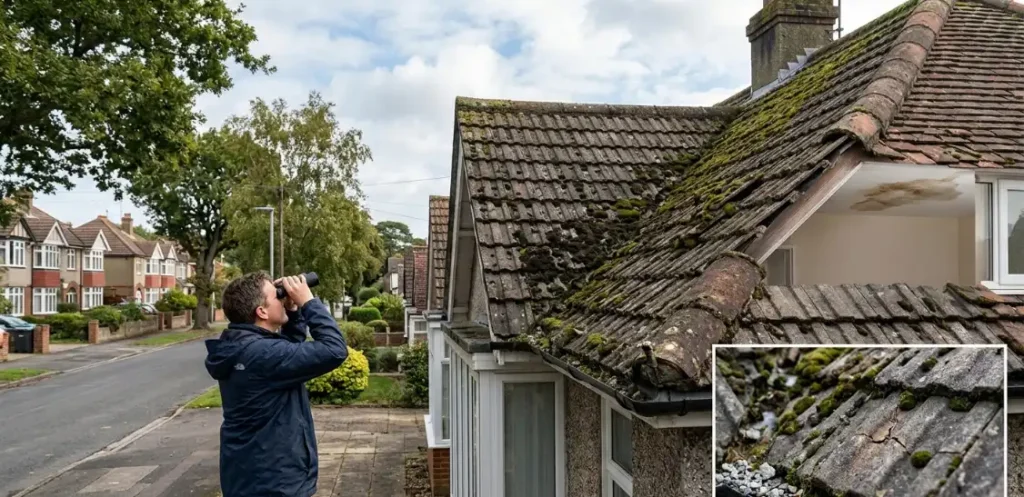
This is the obvious one. Moss typically starts in small clusters along the north-facing slope, roof valleys, and around chimneys where moisture collects. If you’re seeing patches larger than a dinner plate, it’s already established a strong root system in your tile surface.
2. Granules Collecting in Your Gutters
If you have asphalt or felt shingles, check your gutters after a rainy week. Small granules washing off the tiles is a sign that moss and lichen are actively breaking down the protective coating that shields your roof from UV and water damage. This debris is exactly the kind of thing that ends up clogging downpipes, which is why we always recommend pairing moss treatment with a proper gutter cleaning once the roof itself has been dealt with.
3. Damp Patches or Water Stains on Interior Ceilings
Moss acts like a sponge. It holds water against the tile surface far longer than bare tile would, which increases the chance of water working its way beneath the tiles and through the roof deck. If you’re spotting ceiling stains, especially after heavy rain, moss could be a contributing factor not just a leaking seal or flashing issue.
4. Lifted or Dislodged Tiles
As moss grows, its root-like rhizoids expand between the joints and edges of roof tiles. Over time, this physical pressure can lift tiles slightly out of place, breaking the watertight seal your roof depends on. A visual inspection from ground level with binoculars, or better yet a professional survey, will usually catch this before it becomes a leak.
5. Slipped or Cracked Tiles After Frost
Moss retains moisture. When temperatures drop below freezing which happens more than people expect along the Dorset coast in winter that trapped water expands and can crack tiles from the inside out. If you’ve noticed more slipped tiles than usual after a cold snap, moss buildup is often the underlying cause.
6. A Roof That Looks Noticeably Older Than It Is
Moss doesn’t just sit on the surface it accelerates wear. A 15-year-old roof smothered in moss can end up looking, and performing, like a roof twice its age. If your roof looks tired despite being relatively new, moss is a likely culprit, and a standard roof cleaning can often restore its appearance far more affordably than people expect.
7. Increased Energy Bills
This one surprises people. A heavy moss layer holds dampness against your roof deck and insulation, reducing your roof’s ability to regulate heat properly. Combined with reduced loft ventilation (moss can block small vents and gaps), this can quietly push your heating bills up over a winter season.
“Most homeowners don’t call a roofer until they see a leak. By that point, moss has usually been doing damage for two or three years already.” a pattern we see consistently across roof inspections in and around Bournemouth.
Quick Self-Check Table
| Sign | Likely Severity | Suggested Action |
|---|---|---|
| Light green film, small patches | Low | Monitor, schedule a routine inspection |
| Thick moss clumps on north slope | Medium | Book professional moss removal within 1-2 months |
| Granules in gutters | Medium | Combine moss removal with a gutter clean |
| Lifted or slipped tiles | High | Contact a roofer promptly, avoid walking on roof |
| Ceiling stains or damp patches | High | Treat as urgent – inspect for active leaks |
Why Moss Is More Than a Cosmetic Problem
It’s tempting to think of moss as purely an aesthetic issue something that makes a roof look neglected but doesn’t really hurt anything structurally. That assumption is where a lot of costly repairs start.
Moss traps moisture against the roofing material. Tiles, whether concrete, clay, or slate, are designed to shed water quickly. A moss layer disrupts that by holding water in direct contact with the surface for hours or days longer than it would otherwise sit there.
It creates physical pressure between tiles. As moss spreads its root structures into gaps and overlaps, it can gradually force tiles apart, compromising the layered, water-shedding design that makes a tiled roof effective in the first place.
It adds weight. A fully saturated moss layer across an entire roof surface can add a surprising amount of extra load, particularly relevant for older Bournemouth properties with timber roof structures that weren’t necessarily built with this in mind.
It shortens the lifespan of roofing materials. Whether it’s UV-protective granules on shingles or the surface glaze on concrete tiles, moss and the acids it produces as it decomposes organic matter around it will wear these protective layers down faster than normal weathering alone. Applying a protective roof coating and sealing treatment after a clean is one of the most effective ways to slow this cycle down.
DIY Moss Removal vs. Professional Moss Removal
A lot of homeowners start with a DIY approach a stiff brush, a pressure washer, or a bottle of moss killer from the local hardware shop. It’s understandable; it feels like the cheaper, faster option. But there are real risks worth knowing about before you get up on a ladder.
Risks of DIY removal:
- Pressure washers can force water under tiles or strip protective granules, doing more harm than the moss itself.
- Scraping or brushing moss off by hand can crack or dislodge tiles, especially on older clay or slate roofs.
- Without fall protection or roof access equipment, it’s simply not safe most roofing injuries happen during exactly this kind of “quick job.”
- Off-the-shelf moss killers vary hugely in strength and safety, and some can damage guttering, render, or nearby plants if not applied correctly.
For a closer look at exactly why method matters so much, we compared the two most common professional approaches in soft wash vs pressure wash roof cleaning the short version is that low-pressure, biocide-based soft washing consistently outperforms high-pressure jet washing without the tile damage risk.
What professional moss removal typically includes:
- A full roof inspection to assess tile condition, moss severity, and any early signs of damage.
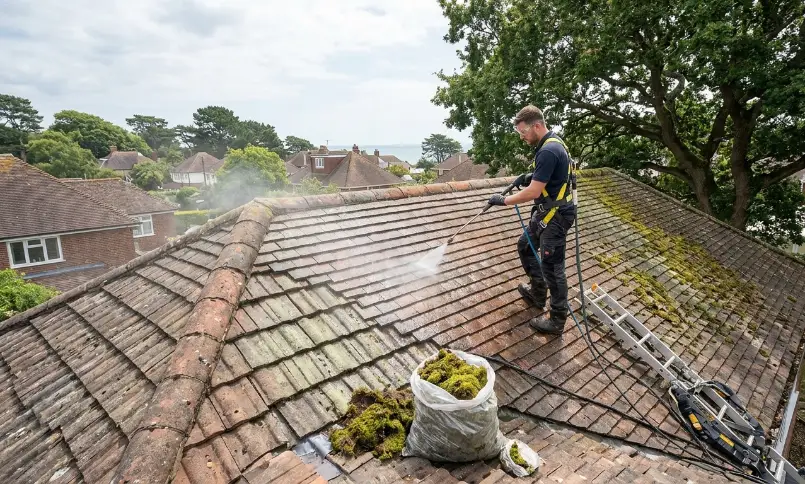
- Manual removal of moss and debris from tiles, ridges and valleys, followed by a soft wash to lift remaining algae and residue.
- Application of a biocide treatment to kill remaining spores and slow regrowth.
- Gutter clearing, since loosened moss debris almost always ends up there.
- A final inspection to flag any tiles that need repair or replacement.
Professional roof cleaners also carry the right insurance and safety equipment for working at height something worth factoring into the “cost” comparison, since a fall or a damaged roof easily outweighs any money saved doing it yourself.
How Often Should Bournemouth Roofs Be Checked for Moss?
Given the coastal climate discussed earlier, a general rule of thumb for Bournemouth homes:
- Annual visual inspection for most properties, ideally after autumn leaf-fall and before winter frost sets in.
- Every 6–12 months for homes with heavy tree cover, north-facing roofs, or a history of moss problems.
- Immediately after storms or periods of prolonged wet weather, since these conditions accelerate moss spread.
Waiting until moss is visibly thick from the street usually means it’s been developing for well over a year already.
What Happens If You Leave It Too Long
Ignoring roof moss doesn’t make it go away it compounds. What starts as a patch of green on a north-facing slope can, within a couple of seasons, spread across the majority of the roof. At that stage, homeowners are typically looking at:
- Higher removal costs, since thicker, older moss growth takes longer to safely clean
- A greater chance of tile damage discovered only once the moss is removed
- Possible underlay or roof deck repairs if moisture has been getting through
- Reduced kerb appeal, which matters if you’re planning to sell your property
We’ve put together a full breakdown of what these jobs actually cost depending on severity in our guide to roof cleaning costs in Bournemouth, which is worth a read before you budget for the work.
Frequently Asked Questions
Does moss actually cause leaks, or is that exaggerated? Moss itself doesn’t cause a leak directly, but the moisture it traps and the way it lifts tiles significantly increases the likelihood of water finding its way underneath your roof covering over time.
Is moss removal worth it if I’m planning to re-roof in a few years anyway? Often yes regular moss maintenance can extend the usable life of your current roof, delaying the cost of a full re-roof by several years in many cases.
Can moss regrow after professional treatment? It can, particularly in shaded, damp areas, which is why most professional treatments include a biocide application designed to slow regrowth rather than a one-time clean alone.
Is it safe to remove moss myself on a single-storey roof? Even on lower roofs, incorrect cleaning methods can damage tiles or void manufacturer warranties, so it’s still worth getting a professional opinion first, especially for anything beyond a very light, small patch.
Getting a Professional Opinion
If you’ve spotted any of the signs above patches of moss, granules in the gutter, lifted tiles, or ceiling stains it’s worth getting a proper inspection rather than guessing at severity from the ground. Our team has been carrying out roof moss removal across Bournemouth, Poole, Christchurch and the wider Dorset area for over 15 years, and every job is backed by a 12-month moss-free guarantee.
You can read more about how we operate on our about us page, browse the full range of services we offer alongside roof cleaning including gutter, soffit and fascia work or head straight to our contact page to book a free, no-obligation inspection.
For general background on how moss and organic growth affect building materials over time, the Royal Institution of Chartered Surveyors (RICS) publishes useful guidance for homeowners on property maintenance and survey standards.
A roof covered in moss isn’t an emergency on day one. But it is a clock quietly ticking. Catching the signs early and bringing in a professional rather than reaching for a pressure washer is almost always the cheaper, safer route in the long run.